Carry-On Baggage in Korea: Domestic vs. International Flights Explained
If you are traveling around Korea, you may be wondering:
“Are the carry-on baggage rules different for domestic and international flights in Korea?”
The answer is yes, for some items.
The biggest difference is the rule for liquids. However, other items such as power banks, knives, tools, and hazardous materials may be restricted on both domestic and international flights.
If you are visiting Korea and planning to take a domestic flight from Seoul to Jeju, Busan, or another Korean city, this guide will help you understand what you can and cannot bring on board.
The key points at a glance
- Domestic flights in Korea do not have the same 100 ml liquid restriction as international flights.
- For international flights, liquids generally must be in containers of 100 ml or less and placed in one transparent 1-liter bag per passenger.
- Power banks cannot be placed in checked baggage.
- Power banks over 160 Wh are not allowed on board.
- Power banks between 100 Wh and 160 Wh require airline approval.
- Knives, certain cutting tools, and tools such as hammers and wrenches are restricted in the cabin.
- If you are unsure about an item, check the official airport or airline guidance before going to the airport.
The biggest difference: liquids
For travelers flying within Korea, the biggest difference between domestic and international flights is the liquid rule.
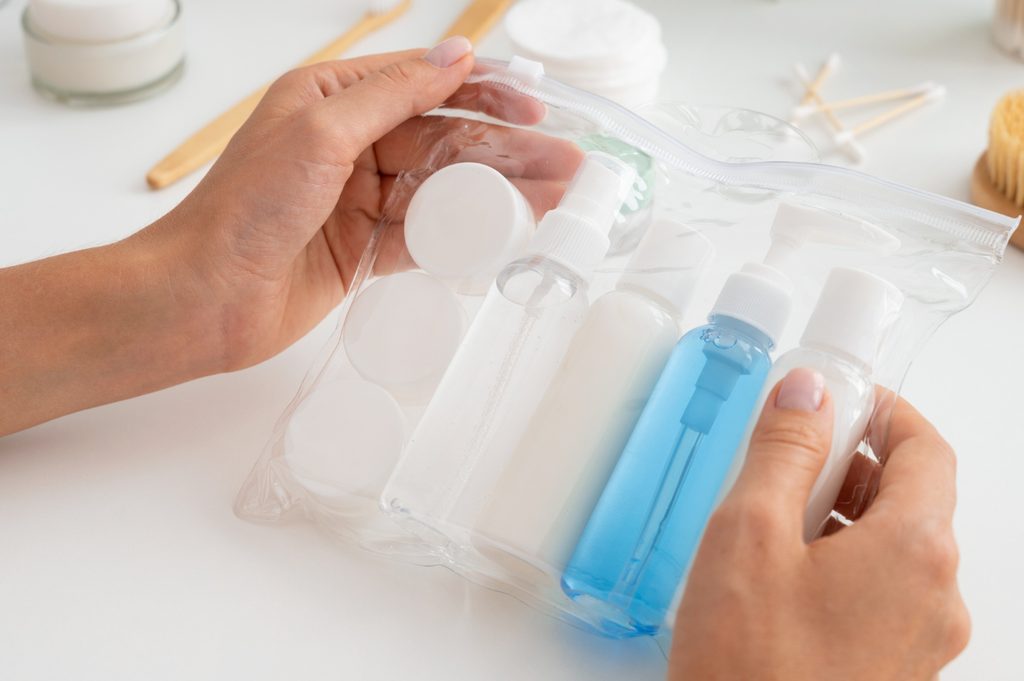
For international flights, liquids, sprays, gels, cosmetics, toiletries, and similar items generally have to follow the 100 ml rule.
Each container must be 100 ml or less, and the containers must fit into one transparent 1-liter ziplock bag per passenger.
Incheon International Airport’s official guidance states that this rule applies to international flights, while there are no such liquid capacity restrictions for domestic flights.
This means that if you are taking a domestic flight within Korea, you do not normally need to pour your water, shampoo, or other ordinary liquids into 100 ml travel containers.
However, there is an important distinction:
“No 100 ml liquid restriction on domestic flights” does not mean that every liquid is allowed.
Flammable gases, flammable liquids, and other hazardous materials are subject to separate aviation safety regulations.
So it is more accurate to think of it this way:
Domestic flight = no international-style 100 ml liquid restriction
rather than:
Domestic flight = all liquids are allowed.
Can you bring bottled water on a domestic flight in Korea?
Generally, yes.
If you are taking a domestic flight within Korea, ordinary bottled water and beverages are not subject to the international 100 ml liquid restriction.
You also do not normally need to transfer shampoo, lotion, or other ordinary liquid toiletries into 100 ml containers simply because you are going through airport security.
This is one of the easiest differences to remember when traveling in Korea.
However, the rule applies to ordinary liquids. Hazardous or dangerous substances are treated separately.
International flights: the 100 ml rule matters
If you are flying internationally from Korea, pay particular attention to your toiletries and cosmetics.
The basic rule is:
100 ml or less per container → one transparent 1-liter bag → one bag per passenger
There is another detail that many travelers miss.
The rule is based on the capacity of the container, not simply how much liquid remains inside.
For example, imagine that you have a 200 ml bottle of lotion with only 50 ml remaining.
The fact that only 50 ml remains does not make the 200 ml container acceptable under the standard 100 ml rule.
Incheon International Airport specifically explains that the 100 ml limit is based on the container’s capacity, regardless of the amount remaining inside.
Liquids and gels can include more than just drinks.
Examples include:
- Water
- Soft drinks
- Perfume
- Lotion
- Shampoo
- Toothpaste
- Sunscreen
- Hair gel
- Cream-type products
- Certain liquid or gel-type foods
So if you are flying internationally from Korea, check your toiletries before leaving for the airport.
What about duty-free liquids?
There is an exception for certain liquids purchased at airport duty-free shops.
Incheon International Airport states that duty-free liquids can be carried on board regardless of volume when they are placed in the designated Duty Free Liquid Item Bag.
The bag must remain sealed until you board the flight to your final destination.
This is particularly important if you are connecting through another airport.
A liquid item that was purchased at duty-free may still be subject to additional security screening at a transfer airport.
If your trip includes a connection, check the rules of your transit airport as well.
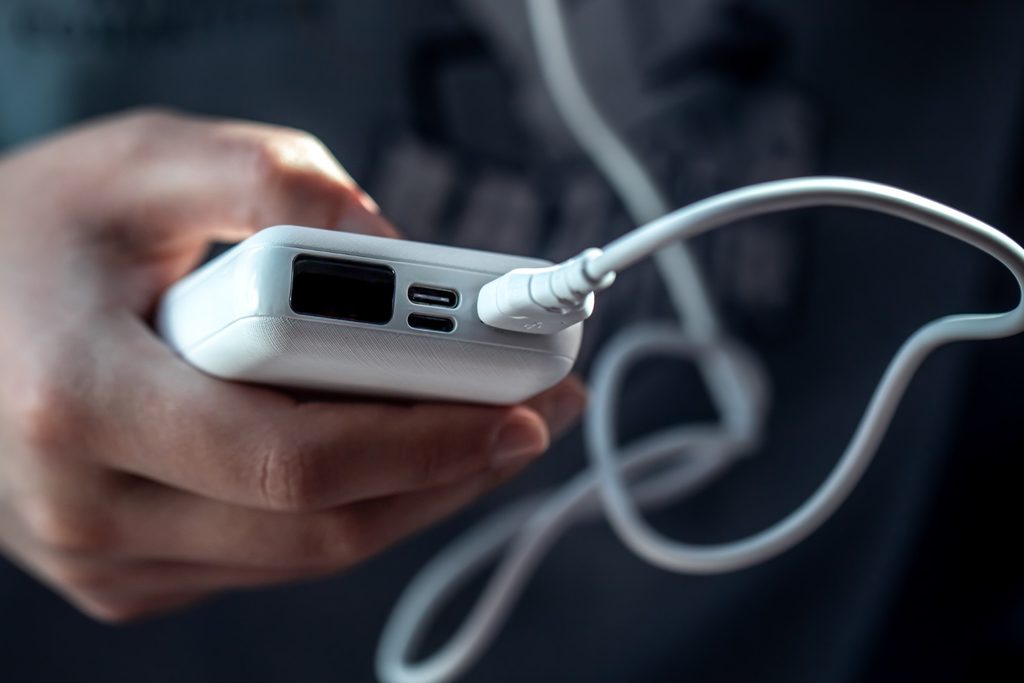
Power banks: an important rule for both domestic and international flights
Power banks are one of the items that travelers should pay particular attention to.
Unlike ordinary liquids, the rules for power banks apply to both domestic and international flights.
Power banks cannot be placed in checked baggage.
They must be carried with you in the cabin.
According to the current guidance from Incheon International Airport:
- 160 Wh or less: up to 2 power banks per passenger
- Over 100 Wh to 160 Wh: airline approval is required
- Over 160 Wh: not allowed
- Checked baggage: not allowed
The Korea Airports Corporation also provides separate guidance on the procedures for carrying power banks on board.
So if you are taking a domestic flight from Seoul to Jeju, for example, you should not put your power bank inside your checked suitcase.
Keep it with you in your cabin baggage and check its Wh rating before your trip.
Can you bring knives and tools on a domestic flight?
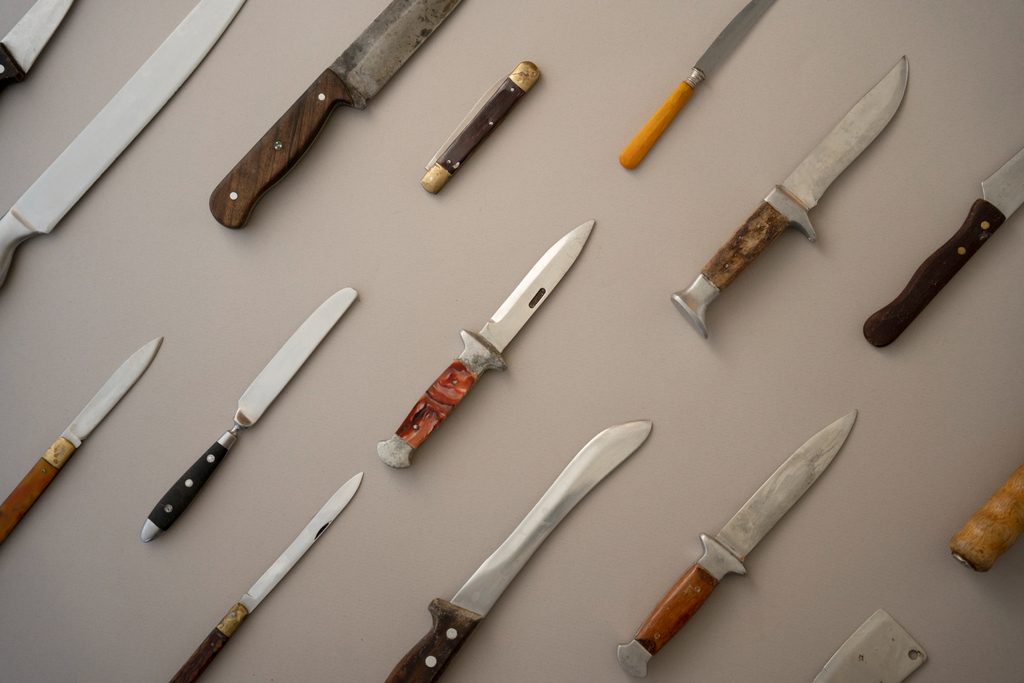
Domestic flights in Korea are not exempt from security restrictions.
Some items cannot be carried into the cabin even if you are taking a domestic flight.
Examples include:
- Knives and certain bladed items
- Cutter knives
- Some scissors and cutting tools
- Hammers
- Wrenches
- Certain tools
- Some sports equipment
Incheon International Airport lists various knives and tools among items that are prohibited or restricted in the cabin.
Korea Airports Corporation also advises passengers to check prohibited items before arriving at the airport. At Gimpo International Airport, for example, passengers are directed to use the official “Mureobosan” service or Aviation Security 365 to check whether an item can be brought onto an aircraft.
The important point is that:
“Not allowed in the cabin” does not always mean “completely prohibited.”
Some items may be transported as checked baggage, while certain dangerous goods are prohibited in both cabin and checked baggage.
If you are unsure, check the specific item rather than guessing.
Dangerous goods are restricted on both types of flights
Domestic flights are not exempt from aviation dangerous-goods regulations.
Items such as explosives, certain flammable gases and liquids, radioactive materials, and other hazardous substances may be prohibited or restricted.
Korea Airports Corporation lists items including explosives, fireworks, flammable gases and liquids, and hazardous or toxic substances among prohibited checked-baggage items.
So when comparing domestic and international flights in Korea, it is better to say:
“Some rules are different depending on the type of flight.”
rather than:
“Domestic flights have relaxed security rules.”
Domestic vs. international carry-on rules at a glance
| Item | Domestic flights in Korea | International flights from Korea |
|---|---|---|
| Ordinary liquids | No 100 ml restriction | Generally 100 ml or less per container |
| Transparent liquid bag | No international 1-liter bag requirement | One transparent 1-liter bag per passenger |
| Bottled water | Generally allowed | Generally restricted if over 100 ml |
| Cosmetics and toiletries | No 100 ml liquid restriction | Generally 100 ml or less per container |
| Power banks | Cabin only | Cabin only |
| Power banks over 100 Wh to 160 Wh | Airline approval required | Airline approval required |
| Power banks over 160 Wh | Not allowed | Not allowed |
| Knives / cutting tools | Cabin restrictions apply | Cabin restrictions apply |
| Tools | Cabin restrictions apply | Cabin restrictions apply |
| Explosives / dangerous goods | Restricted or prohibited | Restricted or prohibited |
This table summarizes the major differences. Actual restrictions can vary depending on the exact item, its size or capacity, the airline, and the airport. Always check the latest official guidance before traveling.
How to avoid problems at the security checkpoint
The easiest way to avoid having to throw something away at the airport is to check your belongings before you leave for the airport.
There are three things worth checking.
1. Is your flight domestic or international?
This is the first thing to check.
The biggest difference is the 100 ml liquid rule.
If you are flying from Seoul to Jeju, for example, you are taking a domestic flight.
If you are flying from Seoul to Tokyo, Bangkok, Singapore, or another country, you are taking an international flight.
2. Check your power bank’s Wh rating
Do not look only at the mAh number printed on the power bank.
Check the Wh rating and whether airline approval is required.
If you are carrying a power bank over 100 Wh, it is especially important to check with your airline before your trip.
3. Check unfamiliar items before arriving at the airport
If you are unsure about an item, do not wait until security screening.
Korea Airports Corporation recommends checking prohibited items in advance through services such as Mureobosan or Aviation Security 365.
A quick check before leaving your hotel can save you time and prevent you from having to discard something at the security checkpoint.
One more thing to check before your flight
After you have checked your baggage and carry-on items, there is one more thing worth checking:
your actual flight status.
Flight times and gates can change.
If you are visiting Korea and are not familiar with the airport, a gate change or delay can be especially confusing.
This is where FLAFLA can be useful.
You can register your flight and check real-time flight information, including updates such as delays and gate changes.
Checking your flight status before moving through the airport can help you avoid unnecessary confusion and give you more time to reach your gate.
So before your flight:
Check your carry-on items.
Check your power bank.
Check your flight status.
A few minutes of preparation can make your airport experience in Korea much easier.
Frequently Asked Questions
Can I bring bottled water on a domestic flight in Korea?
Generally, yes. Domestic flights in Korea are not subject to the international 100 ml liquid restriction. Ordinary bottled water and beverages can generally be carried on board. However, hazardous liquids are subject to separate regulations.
Can I bring a 200 ml cosmetic bottle if only 50 ml is left inside?
For international flights, generally no. The standard liquid rule is based on the container capacity, not the amount of liquid remaining. A 200 ml container does not meet the standard 100 ml requirement even if only 50 ml remains.
Can I put my power bank in my checked suitcase?
No. Power banks cannot be placed in checked baggage. They must be carried in the cabin. Current Incheon Airport guidance allows power banks of 160 Wh or less, with airline approval required for those over 100 Wh and up to 160 Wh.
Are knives allowed on domestic flights in Korea?
Not necessarily. Domestic flights are also subject to cabin security restrictions. Certain knives, cutter knives, and other sharp or dangerous items cannot be carried into the cabin. Some items may be allowed in checked baggage, depending on the item.
Are the rules the same at every Korean airport?
The major aviation-security principles are similar, but specific procedures and airline requirements can vary. If you are unsure about an item, check the departure airport and your airline before traveling.
Final takeaway
If you are visiting Korea, you do not need to memorize every aviation-security rule.
Just remember these three things:
Domestic flights in Korea do not have the international 100 ml liquid restriction.
Power banks must be carried in the cabin, not checked in.
Knives, tools, and dangerous goods can still be restricted on domestic flights.
And if you are unsure about something in your luggage, check it before you arrive at the airport.
A little preparation can save you from having to throw away your belongings at the security checkpoint — and help you start your trip in Korea with less stress.
Official sources
- Incheon International Airport — Carry-on and restricted items guidance
- Korea Airports Corporation — Power bank carry-on procedures
- Gimpo International Airport — Security screening and prohibited items